
What to Know · July 6, 2026 · 6 min · By Ezra Caulfield
Cold Sores and Laser Resurfacing: Why That Antiviral Prescription Is Not Optional
More than half of American adults carry the virus behind cold sores, and a freshly resurfaced face is exactly where it likes to reappear. Why antiviral pills come standard with CO2, and who else needs them.
Tucked into nearly every CO2 resurfacing plan in Beverly Hills is a prescription that confuses patients: a course of antiviral pills, handed out even to people who insist they have never had a cold sore in their life. It looks like an upsell or an excess of caution. It is neither. Herpes reactivation is one of the best-documented complications of laser resurfacing, it is the one most capable of turning a beautiful result into a scarred one, and it is also among the most preventable. Here is the logic behind the pills.
The virus most patients do not know they carry. Cold sores are caused by herpes simplex virus, usually type 1. Estimates from the World Health Organization and U.S. seroprevalence surveys put carriage at roughly half to two thirds of adults, and a large share of carriers have never had a visible outbreak. After the first exposure, often in childhood, the virus does not leave. It retreats up the sensory nerves and sits dormant in the trigeminal ganglion, the nerve junction that serves the face. Stress, fever, ultraviolet light, and physical trauma to the skin can all wake it up, which is why the Mayo Clinic lists injury to the skin among the classic triggers in its overview of cold sores at mayoclinic.org. A negative history means little: you can carry the virus for decades without a single blister and still reactivate after a procedure.
Why resurfacing is the perfect trigger. An ablative laser removes the epidermis across the treated field, and even fractional devices punch thousands of microscopic wounds through it. That does three unhelpful things at once. It delivers exactly the kind of thermal and inflammatory stress that reactivates dormant virus. It strips away the physical barrier that normally confines an outbreak to a small patch of lip. And it leaves a raw, healing surface where viral erosions can spread edge to edge across the treatment area instead of staying put. An ordinary cold sore is a nuisance. Herpes across a resurfaced cheek can delay healing by weeks, invite bacterial superinfection, and heal with permanent scarring or pigment change, precisely the outcomes the laser was supposed to improve.
What the evidence says. This is not a theoretical risk. In the early days of full-face CO2 resurfacing, reported reactivation rates in patients treated without prophylaxis ran well into double digits, high enough that antiviral coverage became a consensus standard within a few years. Prospective work then showed how well prevention performs: a study of valacyclovir prophylaxis in laser skin resurfacing patients, indexed at pubmed.ncbi.nlm.nih.gov, found that a simple twice-daily course kept infection rates to a small fraction of historical figures, whether patients had a known cold sore history or not. The American Academy of Dermatology's patient guidance on cold sores at aad.org makes the same background point: the virus is common, recurrences are triggered by skin trauma, and suppressive medication reliably blunts them.
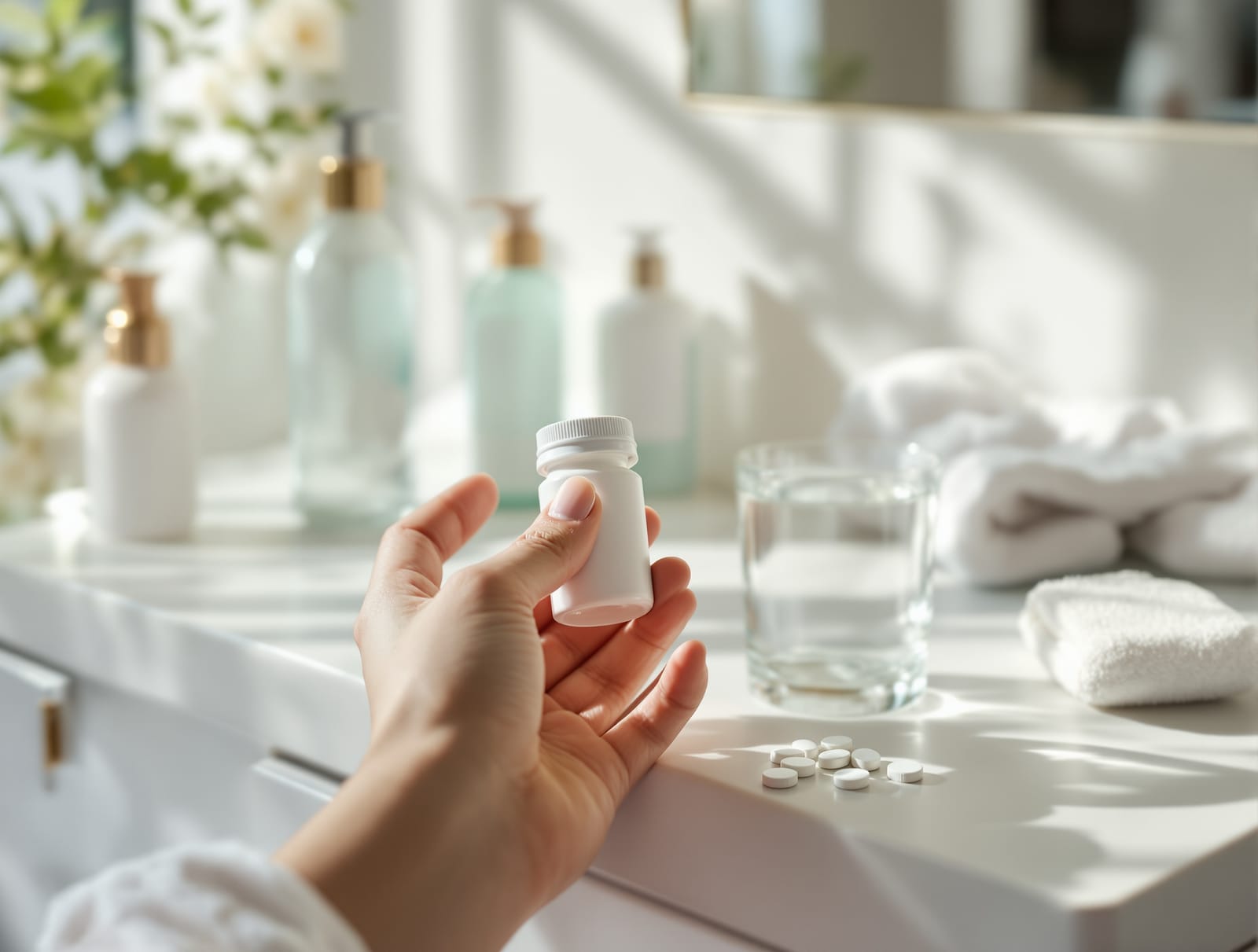
The standard protocol. Most practices use valacyclovir, with acyclovir and famciclovir as equivalent alternatives. A typical course starts the day before or the morning of treatment and continues for seven to ten days, which covers the window until the new epidermis has sealed over. Patients with a strong cold sore history, frequent recurrences, or an outbreak in the months before treatment often get a longer or higher-dose course. The pills are inexpensive, generally well tolerated, and taken on a schedule; the entire intervention costs less than a single follow-up visit for a complication.
Which treatments need coverage and which do not. Fully ablative CO2 and erbium resurfacing always warrant prophylaxis, as does fractional ablative work on the face, especially anywhere near the mouth. Many clinicians also cover deeper non-ablative fractional sessions and perioral treatments such as lip-line resurfacing, where the treatment field sits directly over the nerve territory where the virus sleeps. On the other end of the spectrum, laser hair removal, IPL, and gentle vascular work rarely need routine coverage unless the patient has an active recurrence pattern near the treated area. If you are unsure where your treatment falls, the depth question is a good proxy: the more of the epidermis the laser disrupts, the stronger the case for pills, a theme that also runs through who makes a good CO2 laser candidate.
Treatment day rules. An active cold sore on the day of treatment is an automatic postponement, no exceptions. Firing a laser through an active outbreak risks spreading virus across the field and seeding it into healing skin. The same honesty applies to the intake form: report your cold sore history accurately, including childhood outbreaks and how often they recur, because the answer changes the dose and duration your clinician chooses. It belongs on the same pre-treatment checklist as sun avoidance and skincare adjustments, which we cover in how to prep your skin before a laser treatment.
What a post-laser outbreak looks like. Normal resurfacing recovery involves redness, swelling, oozing, and crusting that improves day over day. A herpes reactivation looks different: clusters of small, punched-out, shallow erosions that appear around day two to five, burn or sting out of proportion to the rest of the face, and spread rather than settle. That combination is a call-the-practice-today situation, not a wait-and-see one, because prompt antiviral treatment usually halts it before scarring. Knowing the difference is part of the broader recovery discipline we outline in what not to do after laser treatment.
The takeaway: the antiviral prescription is not padding on the invoice. It is the cheapest, most evidence-backed insurance in the entire resurfacing process, protecting weeks of healing and thousands of dollars of treatment with a few days of pills. Take the course exactly as written, report your history honestly, and never let anyone resurface skin with an active cold sore on it.
More in Explainer
View all →- Melasma and Lasers: Why Lower Energy Usually Wins
- Fractional CO2 vs Non-Ablative 1550 and 1927 nm: How to Actually Choose a Resurfacing Laser
- 1550 nm or 1927 nm? What the Two Workhorse Fractional Wavelengths Actually Do to Your Skin
- Ablative vs. Non-Ablative Fractional Resurfacing: What the Wavelength Actually Decides