
Cost & Recovery · April 23, 2026 · 5 min · By Damaris Okonjo
Are At-Home Laser Devices Worth It? A Clinical Reality Check
At-home laser devices deliver real results for some users, but power limits, technique barriers, and safety trade-offs demand honest assessment.
Are at-home laser devices worth it? That question sits at the intersection of convenience, cost, and clinical efficacy. The short answer is: sometimes, depending on skin type, condition, and realistic expectations. The longer answer requires understanding how these devices work, who benefits most, and where they fall short compared to professional-grade equipment.
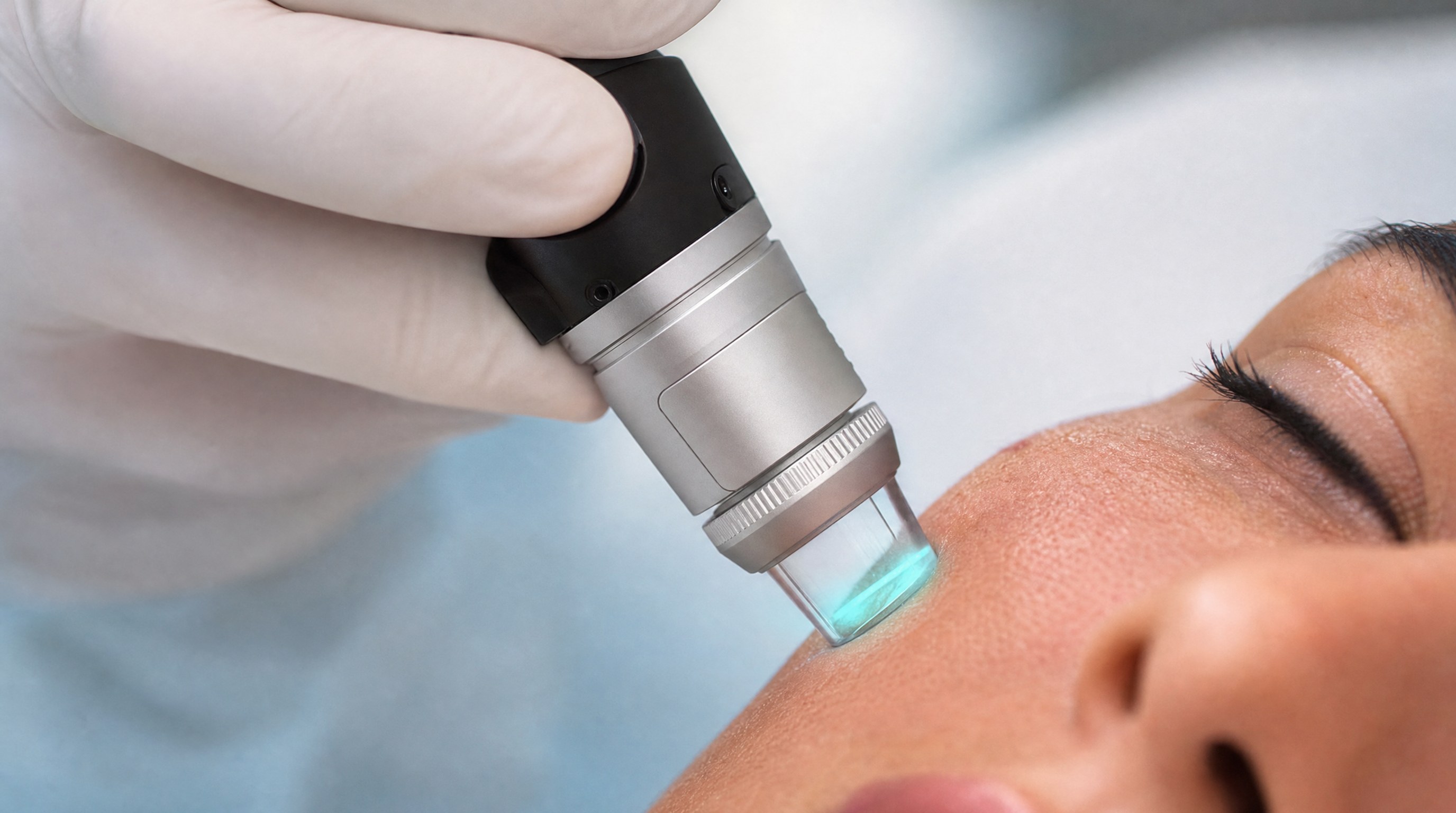
At-home laser and light devices operate on the same fundamental principle as clinical systems: selective photothermolysis. Light energy at specific wavelengths is absorbed by a target chromophore (typically melanin for hair removal, or hemoglobin for vascular lesions) and converted to heat, damaging the target tissue while minimizing collateral damage. The physics hasn't changed. What has changed is power output and safety mechanisms. For an independent overview, see Lasers and lights: how dermatologists use them.
Commercial at-home devices deliver 4 to 12 joules per square centimeter (J/cm2) of energy, depending on the device and setting. Professional systems typically operate at 15 to 60 J/cm2 or higher. That gap matters. Lower fluence (energy density) reduces efficacy but also reduces risk of burns, scarring, and post-inflammatory hyperpigmentation. For many users, this trade-off makes sense. For others, it means minimal or temporary results.
Hair removal is the dominant at-home application. The mechanism is straightforward: light targets melanin in the hair shaft and follicle, heating it to damage the growing cells responsible for regrowth. Consumers report noticeable hair reduction after 6 to 12 weeks of weekly or biweekly treatment. Clinical data supports this for light to medium skin tones (Fitzpatrick types I to III). Results on darker skin (Fitzpatrick types IV to VI) are less consistent, partly because melanin in the epidermis also absorbs energy, increasing burn risk. Some newer at-home devices use longer wavelengths (1064 nanometers or Nd:YAG-type technology) to reduce this risk, but professional clinical evidence remains stronger for darker skin types.
For other indications, evidence is thinner. At-home systems marketed for acne, pigmentation, or anti-aging rely on lower power and shorter treatment courses. Acne improvement may occur via bacterial reduction or inflammation suppression, but results are modest and temporary. Pigmentation improvement depends on device wavelength and spot size; some users see fading of age spots or melasma, while others see no change. Professional treatments remain superior for these concerns.
Technique barriers are substantial. Professional providers are trained to assess skin type, calibrate settings, perform uniform coverage, and recognize contraindications. At-home users must do this themselves. Inconsistent spacing, missed areas, incorrect angle, wrong setting for skin tone, or failure to account for photosensitizing medications can all reduce results or increase adverse effects. Instructions help, but they cannot replace clinical judgment. For related context, see our note on Laser for Broken Capillaries on the Nose: A Clinical Treatment Guide.
Recovery and side effects also differ. At-home treatments typically cause mild erythema (redness) lasting hours to 1 to 2 days. Blistering, scarring, and permanent pigmentation changes are rare at manufacturer-recommended settings but possible with misuse. Darker skin types face higher post-inflammatory hyperpigmentation risk even at appropriate settings. Pre-treatment sun protection and post-treatment sunscreen are non-negotiable.
Cost analysis favors at-home devices for long-term hair removal. An at-home device costs 200 to 600 dollars upfront, with minimal ongoing cost. A single professional hair removal session costs 150 to 400 dollars depending on area size and location; a typical course requires 6 to 8 sessions. Over time, at-home devices yield savings. However, if the device doesn't work for an individual's skin or condition, the upfront cost is wasted.
Candidacy matters. At-home devices work best for light to medium skin with dark hair, seeking hair reduction without contraindications (pregnancy, certain medications, active infection, or keloid history). They work poorly for very dark skin, very fine hair, or conditions requiring precise targeting or higher power.
The honest clinical verdict: at-home laser devices deliver real, measurable results for hair removal in appropriate candidates, justifying the cost for many users. For other applications, results are modest. Professional treatment remains superior for efficacy, safety on diverse skin types, and consistency. At-home devices are worth considering as a convenience-first, cost-effective option for hair removal, provided users accept slower results and understand their limitations.
Related reading: Laser vs Chemical Peel for Sun Damage: Mechanism, Recovery, and Results, Laser Skin Treatments for Men: A Clinical Guide to What Actually Works.