
Safety · July 23, 2026 · 6 min · By Damaris Okonjo
Does Laser Really Cure Toenail Fungus? A Myth Check on What the Light Actually Does
Laser can make a fungal toenail look clearer, but cure is the wrong word for what it delivers, and the ads sell a permanence the published evidence simply does not support.
The pitch is almost impossible to resist. A few painless sessions, no pills, no blood tests to check your liver, and the fungus that has kept your toes hidden in closed shoes for years is simply zapped away. If you have lived with a thick, yellowed nail, that promise lands hard. The word doing all the quiet work in it is cure, and it is exactly the word to distrust.
This myth check gives you two things the advertisement will not: an honest account of what a laser actually does to a fungal nail, and an original candidate-and-expectations self-screen that tells you whether laser is a reasonable choice for your situation and what result you can realistically expect from it. The goal is not to dismiss the treatment. It is to separate what it can do from what it is sold as doing.
Start with why toenail fungus is so stubborn, because that explains everything. Onychomycosis is a fungal infection living within and beneath the nail plate, and the StatPearls review of onychomycosis describes how the hard nail shields the fungus from almost anything applied to the surface. That protective barrier is why creams often fail, why oral pills need months, and why the infection resists easy fixes. Any honest treatment conversation starts by respecting how well-defended this fungus is.
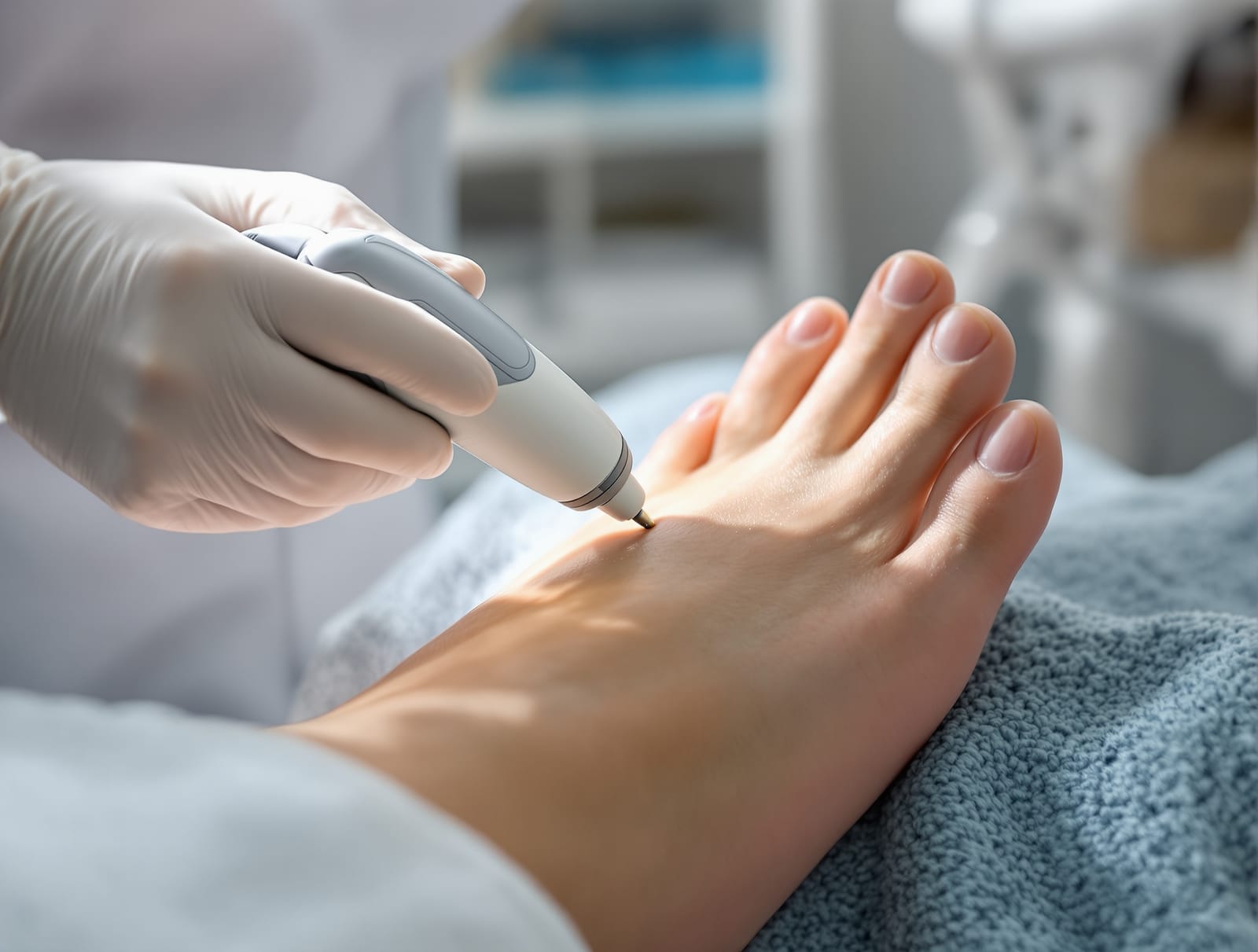
Now what the laser truly does. The device heats the nail to damage the fungus through targeted warmth, and it can improve the nail's appearance and produce temporary clearing. Read the regulatory language carefully, because it is precise: laser devices for this use are generally cleared for a temporary increase in clear nail, not for curing the infection. That careful wording is the entire myth in one phrase. The laser is authorized to make the nail look better for a while, which is a genuinely different claim from eradicating the fungus.
This is the distinction the marketing blurs: clearance versus cure. Clearance means the visible nail looks clearer as healthy nail grows in. Mycological cure means the fungus itself is actually gone, confirmed by a negative lab test. Published cure rates for laser are modest and inconsistent and generally fall below what proven oral antifungal pills achieve, which is why the American Academy of Dermatology still frames oral and topical antifungals as the mainstays and treats laser nail fungus therapy as an option with limited evidence rather than a first-line cure.
Here is the self-screen, part one, candidacy. Laser is a reasonable consideration mainly for people who cannot take oral antifungals, because of liver concerns or drug interactions, who have mild to moderate involvement, and who accept modest odds in exchange for avoiding pills. It is a weak first choice for someone who could simply complete a proven oral course, and thinking about whether a laser treatment earns its place is the same value judgment we apply in is a laser treatment worth it.
Part two, expectations. Plan on multiple sessions, on months before you see change because nails grow slowly, and on a real possibility of only partial improvement or no true cure at all. Because laser for nails is usually paid out of pocket, weigh the cost the way you would any elective laser decision, in the spirit of our guide to what laser treatment costs. Going in expecting a clearer-looking nail rather than a guaranteed cure is what keeps this from feeling like money wasted.
Part three, the relapse reality almost no ad mentions. Even when a nail clears, reinfection is common, because the fungus also lives in your shoes, your socks, and the skin of your feet. Without addressing that environment, treating footwear, keeping feet dry, and managing any athlete's foot, the fungus frequently returns to a freshly cleared nail. Prevention is not an afterthought here; it is half the treatment, and any plan that ignores it is set up to disappoint.
And here is what the studies do not tell you cleanly. Laser nail research uses a patchwork of different devices, settings, session counts, and short follow-up windows, and solid multi-year cure data is thin. That means the honest success rate for your particular nail is genuinely uncertain, not a fixed number a clinic can promise. It also means step one is confirming the diagnosis at all, since thickened or discolored nails are not always fungal, a point the AAD stresses in its nail fungus FAQs; lasering a nail that was never infected treats nothing. Deciding whether you are a fit for the treatment is the same candid candidacy conversation described in who is a good candidate for a laser procedure.
The takeaway keeps the useful part and drops the fantasy. Laser can make a fungal toenail look better and is a defensible option when pills are off the table, but treat the word cure as marketing rather than medicine. Confirm the diagnosis first, weigh proven oral antifungals honestly, expect clearance rather than eradication, and build relapse prevention into the plan from day one. A clearer nail is a real, worthwhile result. It is simply not the same as the fungus being gone for good, and knowing the difference is what protects both your feet and your budget.