
Treatment Guide · June 7, 2026 · 4 min · By Damaris Okonjo
BBL vs IPL: Are They the Same Photofacial?
The BBL vs IPL difference is real and clinically significant, even though both treatments use broad-spectrum light.
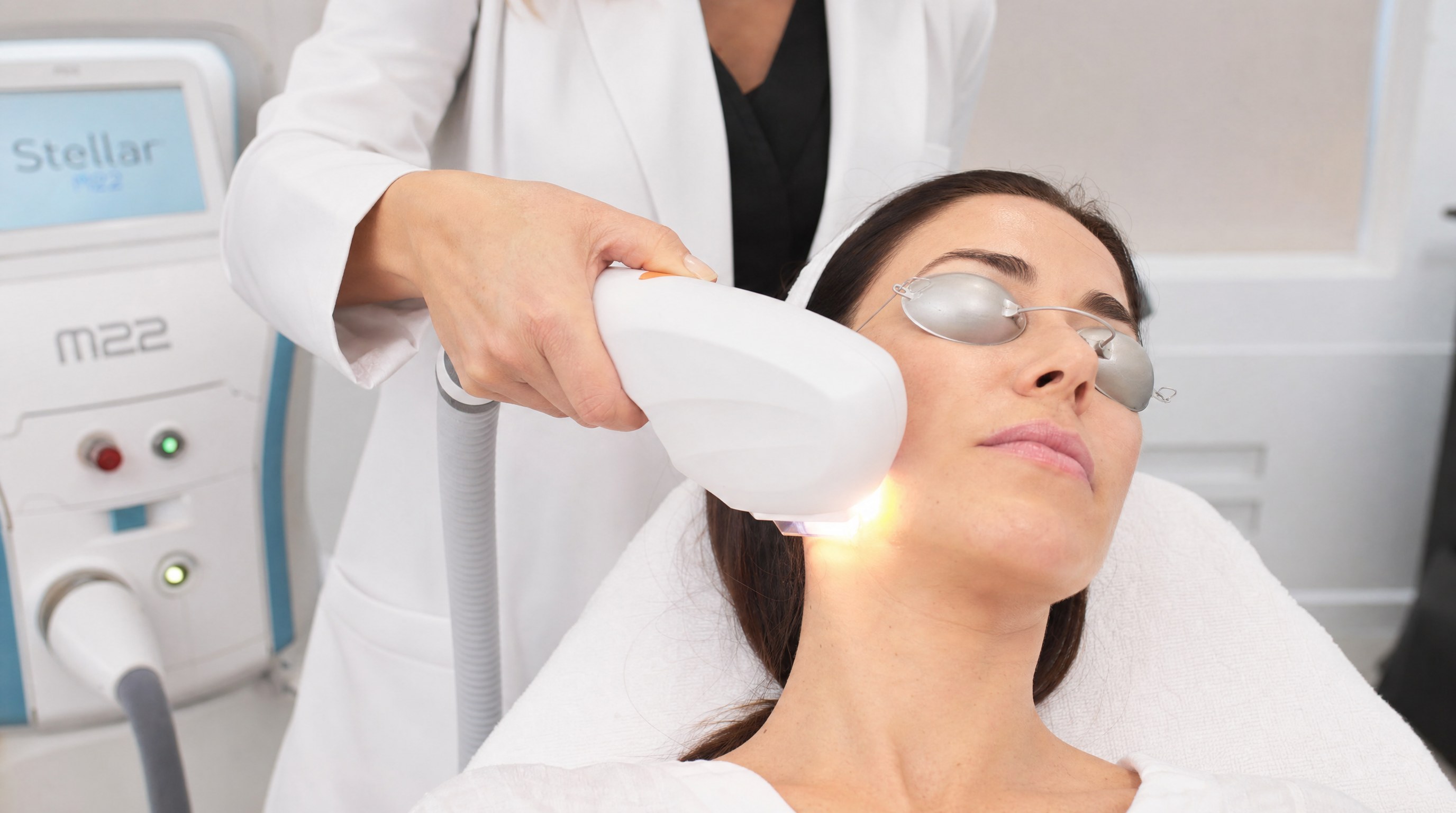
The BBL vs IPL difference is one of the most common points of confusion in cosmetic dermatology, and understandably so. Both treatments use intense pulses of broad-spectrum light to address skin concerns like sun damage, redness, and uneven tone. Both are sometimes marketed under the umbrella term "photofacial." But the technology behind each device, and the clinical outcomes they produce, are not identical.
IPL, or Intense Pulsed Light, has been in clinical use since the mid-1990s. It works by emitting a broad spectrum of light wavelengths, typically 500 to 1200 nanometers, which are filtered to target specific chromophores in the skin. Those chromophores are primarily melanin and oxyhemoglobin. When melanin absorbs the light energy, pigmented lesions like sunspots break up and rise to the surface. When oxyhemoglobin absorbs it, visible vessels like facial telangiectasias are selectively damaged and gradually cleared by the body. IPL is not a laser. It does not produce a single coherent wavelength. It is a broadband light source with swappable cutoff filters. For an independent overview, see Intense pulsed light and photofacials.
BBL, which stands for BroadBand Light, is a device manufactured by Sciton. Mechanically, it is also a broadband pulsed light platform, which is why the confusion persists. The meaningful differences lie in the engineering. BBL uses a contact cooling system that keeps the skin surface at a consistent temperature throughout the pulse, reducing the risk of epidermal damage and allowing for more aggressive fluences. The device also offers faster repetition rates and more precise filter options. A 2013 study published in the Journal of Investigative Dermatology found that patients treated with BBL over multiple years showed gene expression patterns associated with younger skin, a finding that standard IPL research has not replicated to the same degree. That study has driven significant interest in BBL as a maintenance treatment, not just a corrective one.
For a deeper clinical breakdown of how these devices compare in practice, including case photography and provider notes, ask to review documented outcomes during a consultation.
Candidacy considerations matter a great deal with both modalities. Neither BBL nor IPL is well suited for darker skin tones, specifically Fitzpatrick skin types IV through VI, without significant protocol modification. The broadband energy can over-stimulate melanin in deeper skin layers, leading to post-inflammatory hyperpigmentation rather than clearing it. Providers treating patients with more melanin-rich skin often pivot to a long-pulsed Nd:YAG laser, which penetrates deeper with less epidermal melanin absorption, making it a safer option for vascular concerns in those patients. Anyone consulting for a photofacial treatment should expect a thorough skin-type assessment before a provider commits to a device. For related context, see our note on Laser treatment for acne scars.
Recovery from both treatments is generally described as minimal, though that word gets used loosely. After a session, treated pigmented spots typically darken over the following three to five days before flaking off within one to two weeks. Redness and mild swelling can appear immediately after treatment and usually resolve within 24 to 48 hours. Sun avoidance before and after treatment is not optional. Active tanning or recent unprotected sun exposure increases the risk of adverse pigment response significantly. Patients are typically asked to avoid direct sun for two to four weeks before a session and to use broad-spectrum SPF 30 or higher consistently during the treatment course.
A standard IPL treatment series runs three to five sessions spaced roughly three to four weeks apart. BBL protocols vary by indication. For correction of existing photodamage, providers often recommend two to four sessions. For the gene-expression maintenance approach referenced in the literature, some clinics recommend one to two annual sessions once a baseline is established.
On cost, IPL sessions at accredited medical spas typically range from 200 to 500 dollars per session, depending on the treatment area and geographic market. BBL sessions tend to run higher, from 350 to 800 dollars per session, reflecting both the equipment cost and, in many markets, the expectation that a physician or experienced nurse practitioner is involved in the treatment planning. Full-face packages for either modality can bring the per-session cost down when purchased as a series.
The bottom line is that BBL and IPL share a foundational mechanism but are not interchangeable. BBL's engineering refinements, its published data on collagen remodeling, and its precise cooling controls give it a clinical profile that differs from commodity IPL devices, particularly for patients looking at long-term maintenance rather than one-time correction. For patients with darker skin tones, neither device may be the appropriate first choice, and that conversation should happen before booking, not after.
Related reading: How to choose the right laser treatment for your concern, How fractional lasers changed resurfacing.