Skin Concerns · June 6, 2026 · 4 min · By Ezra Caulfield
Picosecond vs Q-switched laser: Which technology removes pigment better?
Two laser platforms dominate pigment removal. Understanding their mechanics helps explain why clinicians choose differently.
Picosecond vs Q-switched laser technology represents one of the most significant technical debates in cosmetic dermatology today. Both platforms can remove unwanted pigment, but they work through fundamentally different mechanisms, produce different outcomes, and carry distinct recovery profiles. For patients considering treatment for tattoos, melasma, or post-inflammatory hyperpigmentation, understanding the distinction matters.
Q-switched lasers have dominated the field since the 1990s. They emit energy in billionths of a second (nanoseconds), creating a thermal effect that shatters pigment particles through rapid heating. When the laser pulse strikes melanin or tattoo ink, the pigment absorbs that energy and fractures into smaller fragments. The body's lymphatic system then clears these particles over weeks to months. Common Q-switched platforms include Nd:YAG, ruby, and alexandrite lasers, each targeting different pigment colors and depths. For an independent overview, see Melasma and pigmentation: diagnosis and treatment.
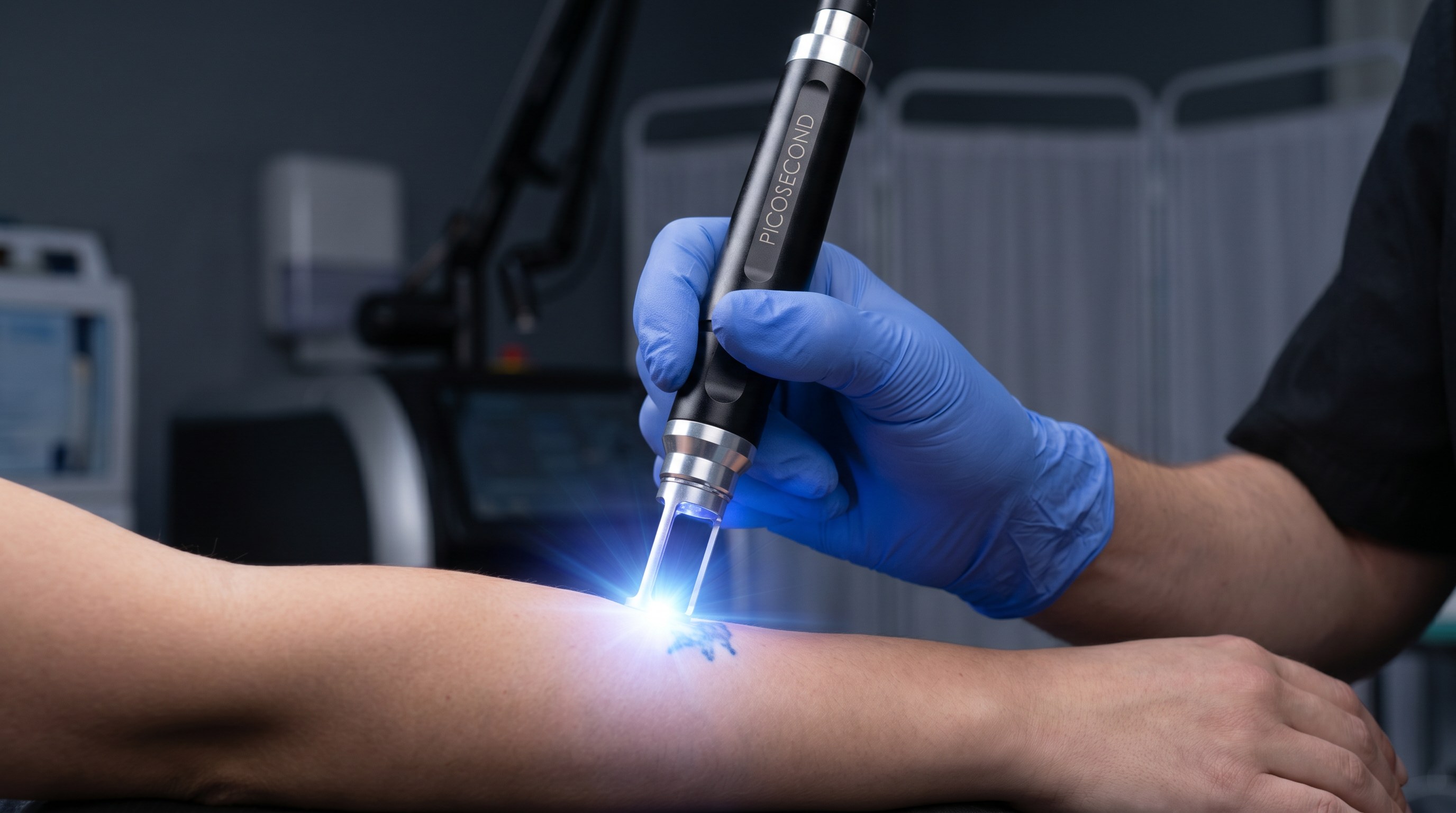
Picosecond lasers are newer technology, firing in trillionths of a second (picoseconds), roughly 1,000 times faster than Q-switched devices. This ultrashort pulse duration produces photoacoustic effects rather than purely thermal ones. The pigment particle shatters through pressure waves generated by the laser energy, not just heat. In theory, this means more efficient fragmentation at lower overall energy, potentially reducing collateral damage to surrounding tissue.
The practical difference in efficacy remains nuanced. Studies show picosecond lasers can clear certain tattoo pigments, particularly blue and black inks, in fewer sessions than Q-switched devices. For professional tattoos, this translates to 6 to 10 sessions with picosecond technology versus 10 to 15 sessions with Q-switched platforms. For cosmetic pigmentation concerns like melasma or post-inflammatory hyperpigmentation, the gap narrows considerably. Both technologies achieve visible improvement, though response depends heavily on individual skin biology, pigment depth, and color.
Recovery and side effects differ meaningfully. Q-switched lasers produce visible blistering, crusting, and downtime lasting 7 to 14 days in most cases. Picosecond lasers typically generate less dramatic immediate effects, with crusting or pinpoint bleeding that resolves within 3 to 5 days. Neither treatment is truly non-invasive, but picosecond's shorter pulse creates gentler tissue stress, which some practitioners correlate with lower rates of post-inflammatory hyperpigmentation, a particular concern in darker skin tones. For related context, see our note on Laser downtime and aftercare: protecting your investment.
Skin-tone considerations are critical for both technologies. While Nd:YAG Q-switched lasers have long been considered safer for darker skin because they penetrate deeper and spare superficial melanin, picosecond Nd:YAG devices have shown similar safety profiles. The key remains wavelength and careful fluence selection, not the pulse duration alone. Risk of post-inflammatory hyperpigmentation or scarring exists with both platforms if settings are too aggressive or aftercare is neglected, regardless of skin tone.
Cost differs based on technology age and availability. Q-switched laser sessions typically range from 200 to 800 dollars per treatment, depending on treatment area and geographic market. Picosecond sessions generally run 400 to 1,200 dollars per treatment, reflecting newer equipment costs and often fewer total sessions needed. Over a complete treatment course, total expenditure may be comparable, though picosecond patients may spend less total time and experience less cumulative downtime.
Clinician experience remains perhaps the most important variable. A skilled operator using older Q-switched technology often achieves better results than an inexperienced practitioner with picosecond equipment. Both platforms require precise settings, appropriate wavelength selection for the target pigment, and realistic patient counseling about the number of sessions required and final results.
For patients deciding between these options, the choice depends on several factors: urgency (picosecond reduces total treatment time), downtime tolerance, skin tone, pigment type, and practitioner expertise. Neither technology is universally superior. Picosecond offers faster fragmentation and less collateral heat, but Q-switched remains effective, better established in clinical literature, and often more accessible. A consultation with a qualified dermatologist or laser specialist should address individual pigment characteristics, skin type, and realistic outcome expectations before either technology is selected.
Related reading: Lasers for pigment and the special problem of melasma, CO2 Laser vs Erbium Resurfacing: How They Work and What to Expect.
Keep reading
1550 nm vs 1927 nm: Choosing the Right Non-Ablative Fractional Wavelength for Your Skin GoalMore in Explainer
View all →- 1550 nm vs 1927 nm: Choosing the Right Non-Ablative Fractional Wavelength for Your Skin Goal
- CO2 vs Erbium: What the Wavelength Actually Decides in a Beverly Hills Resurfacing Consult
- Why Wavelength Matters: Laser Hair Removal and Resurfacing for Deeper Skin Tones
- Choosing a Hair Removal Wavelength: What 755, 810, and 1064 Actually Mean for Your Skin