
Cost & Recovery · May 14, 2026 · 5 min · By Ezra Caulfield
Vbeam Recovery and Bruising: What to Expect After Treatment
A clinical overview of timeline, mechanisms, and realistic expectations for healing after Vbeam laser therapy.
Vbeam recovery and bruising represent the most common patient concerns following pulsed dye laser treatment. Understanding what happens in the hours and weeks after a Vbeam session helps patients plan downtime, manage expectations, and recognize normal versus concerning healing patterns.
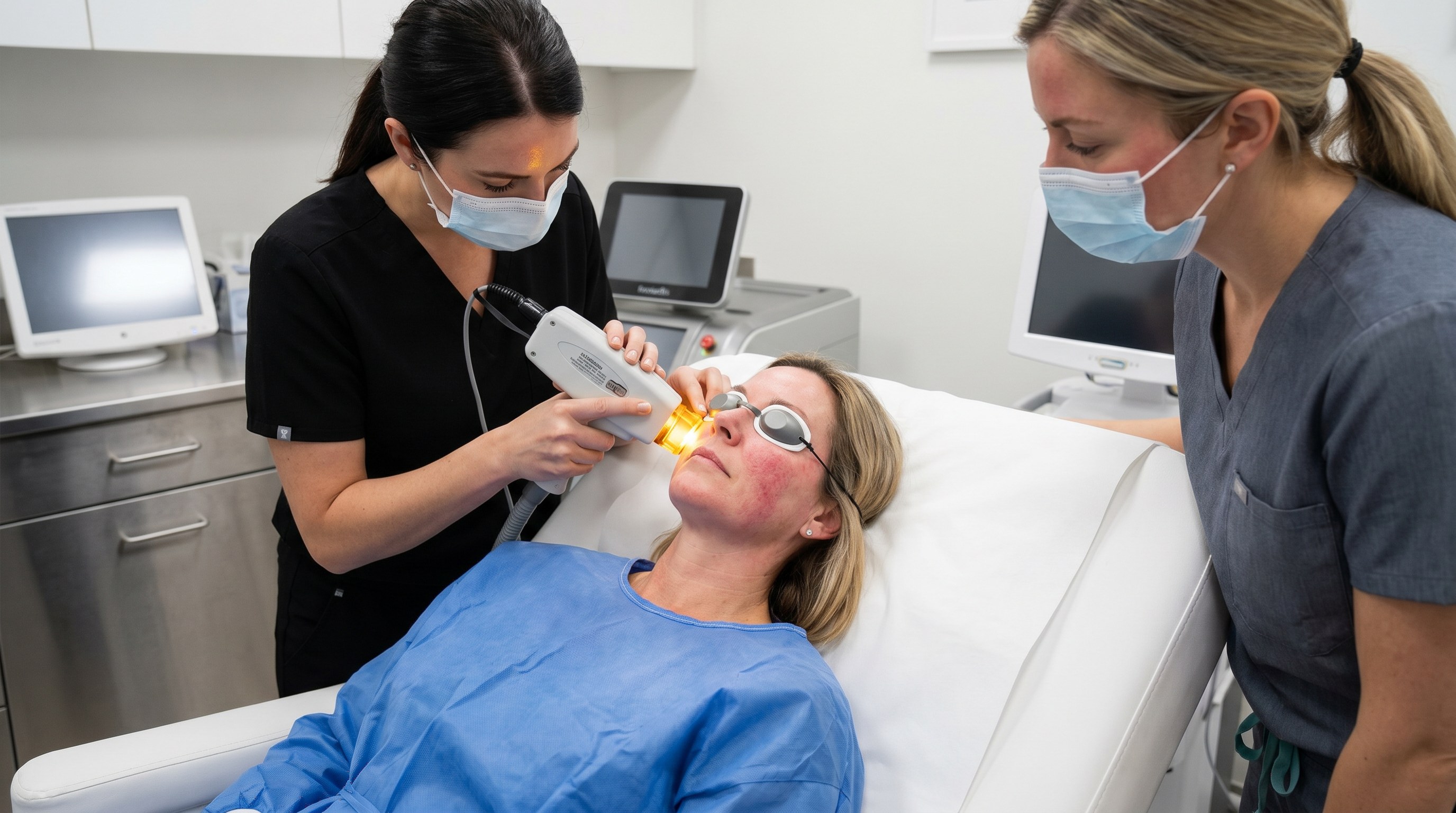
The Vbeam is a pulsed dye laser that emits light at 595 nanometers, a wavelength absorbed selectively by oxyhemoglobin in red blood cells. When the laser pulse strikes targeted vasculature or red pigment in the skin, the energy converts to heat, damaging vessel walls or melanin-rich cells while leaving surrounding tissue largely unharmed. This selective photothermolysis is the mechanism behind the device's effectiveness for rosacea, port-wine stains, spider veins, and certain pigmented lesions. However, the thermal injury that makes treatment work is also responsible for post-treatment bruising and inflammation. For an independent overview, see Lasers and lights: how dermatologists use them.
Immediate effects appear within minutes. Treated areas typically show erythema, or redness, which can persist for hours to several days depending on settings and skin type. Purpura, the visible bruising caused by microhemorrhage in the dermis, often develops immediately and represents blood leakage from damaged capillaries. This is not a complication but rather evidence that the laser reached its target. Patients should expect purple or dark-red discoloration that may be tender to touch.
The bruising timeline follows a fairly predictable pattern. Purpura is most intense during the first 24 to 48 hours after treatment. By day three to five, the purple hue begins shifting toward brown or yellow as the body breaks down hemoglobin. Most patients see 60 to 80 percent resolution of visible bruising by one week. Complete fade of all bruising typically occurs within 10 to 14 days, though some residual discoloration may linger slightly longer on areas treated with higher fluences or on patients with slower healing responses.
Swelling accompanies bruising. Mild to moderate edema develops over the first few hours and peaks around 24 hours post-treatment. Cool compresses and elevation help reduce swelling. Most edema resolves within 48 to 72 hours. Some practitioners recommend topical arnica or bromelain supplements, though clinical evidence for these remedies remains mixed.
Post-inflammatory hyperpigmentation (PIH) represents a separate consideration, particularly for patients with darker skin types or higher Fitzpatrick classifications. While purpura is mechanical bruising, PIH occurs when the inflammatory response triggers increased melanin production. This can develop several days to weeks after treatment and may persist for weeks to months. Patients with skin of color should discuss this risk candidly with their provider before treatment. Lower fluences and longer wavelength options like Nd:YAG lasers are sometimes preferred for these patients to reduce PIH risk, though they may sacrifice some efficacy for vascular lesions. For related context, see our note on Laser for Spider Veins on the Legs: How It Works and What to Expect.
Candidacy for Vbeam includes patients with fair to medium skin tones seeking treatment of rosacea, telangiectasia, port-wine stains, hemangiomas, and certain red or brown pigmented lesions. Patients should have realistic expectations: one treatment rarely achieves complete clearance, and most vascular lesions require multiple sessions spaced four to six weeks apart. Patients on anticoagulants, those with active infections or open wounds, and those with certain medications that increase photosensitivity are typically poor candidates.
Cost varies by geographic region and treatment area. A single Vbeam session typically ranges from 250 to 600 dollars, depending on the size of the treated region and the clinic's pricing structure. Full-face rosacea treatment sits at the higher end; small targeted lesions cost less. Series discounts sometimes apply for patients committing to multiple treatments.
Recovery downtime is minimal compared to ablative laser resurfacing. Most patients return to normal activities immediately, though they should avoid direct sun exposure, strenuous exercise that raises blood pressure, hot showers, and vasodilating activities for 24 to 48 hours. These precautions help minimize additional bruising and edema. Broad-spectrum sunscreen of at least SPF 30 is essential daily to prevent post-treatment hyperpigmentation and protect healing skin.
Unusual signs warranting contact with the treating provider include severe blistering, signs of infection such as pus or spreading warmth, prolonged swelling beyond one week, or bruising that worsens after day three. While some bruising and mild discomfort are expected and normal, these outlier responses may indicate technique or assessment issues.
Vbeam recovery and bruising, in most cases, represent a straightforward healing process tied directly to the mechanism that makes the treatment effective. Patient education, realistic timelines, and appropriate post-care instructions form the foundation of satisfied outcomes.
Related reading: Microneedling vs Fractional Laser for Acne Scars: How They Work and What to Expect, Lasers for pigment and the special problem of melasma.