
Treatment Guide · April 9, 2026 · 5 min · By Ezra Caulfield
What Is Moxi Laser and What Is It Built For
A clinical overview of fractional laser technology, recovery expectations, candidacy, and realistic outcomes.
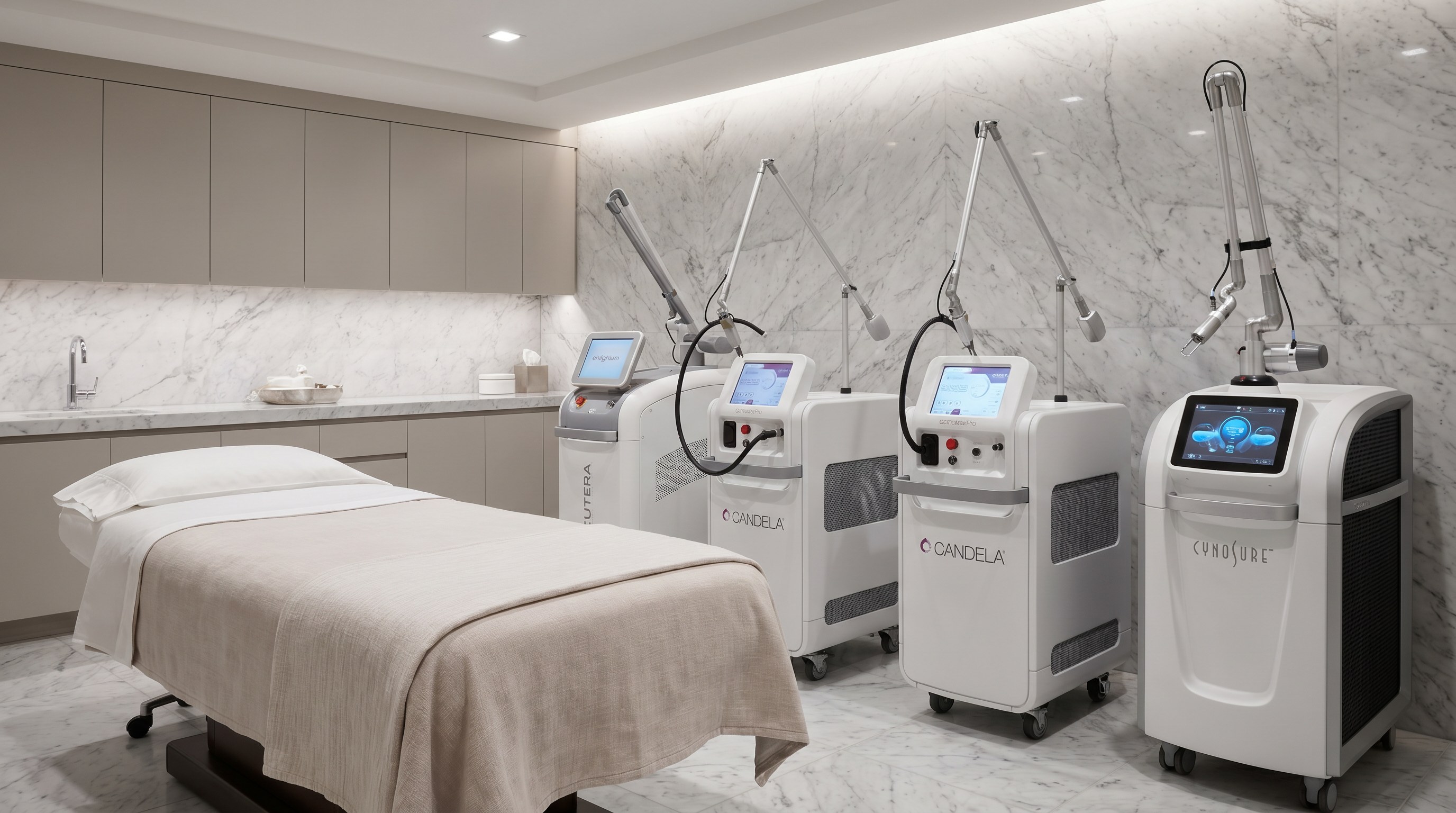
What is Moxi laser? It is a fractional non-ablative laser manufactured by Cutera that operates at 1927 nanometers in the infrared spectrum. Unlike ablative lasers that vaporize the skin's surface, the Moxi delivers energy in a gridded pattern that heats deeper dermal tissue while leaving the epidermis intact. This selective heating triggers collagen remodeling and repair without removing skin, which is why recovery is significantly faster than traditional resurfacing lasers.
The device uses fractional technology, meaning it treats only a fraction of the skin at one time, leaving untreated columns of tissue between treatment zones. These intact areas serve as biological "bridges" that accelerate healing. A single pass covers roughly 20 to 25 percent of the target area, requiring multiple passes to treat the full face, hands, neck, or chest. The laser's specific wavelength penetrates deeply enough to stimulate fibroblasts and collagen production but shallow enough that surface damage is minimal. For an independent overview, see Lasers and lights: how dermatologists use them.
Moxi is indicated for patients seeking photoaging reversal without significant downtime. Common treatment goals include addressing fine lines, skin texture irregularities, mild pigmentation concerns, and loss of skin elasticity. It is marketed as a lunch-hour procedure, though clinical expectations should remain grounded in reality. The device works best on patients with mild to moderate concerns rather than severe sun damage or deep wrinkles, which may require more aggressive fractional or ablative alternatives.
Candidacy matters significantly. Moxi performs well on lighter to medium skin tones where the risk of post-inflammatory hyperpigmentation is lower. Patients with darker skin tones, particularly those prone to hyperpigmentation or keloid formation, require conservative settings and careful evaluation. The non-ablative nature does reduce melanin-related risks compared to ablative resurfacing, but darker skin still demands individualized treatment parameters. Providers typically perform a test spot first on darker skin types to assess response.
The treatment itself feels like a warm spray of pinpricks. Discomfort is generally mild to moderate, and topical numbing agents are often applied beforehand. A full-face session typically lasts 15 to 30 minutes depending on the number of passes and area treated. Immediately after treatment, the skin appears red and may feel warm, similar to a moderate sunburn. Mild swelling can occur and usually peaks within 24 hours.
Recovery is notably rapid, which is Moxi's primary clinical advantage. Most patients experience redness and possible light peeling for 2 to 3 days. By day 4 or 5, many can resume normal activities and apply makeup. Unlike ablative fractional lasers such as CO2 or erbium, which require 7 to 14 days of significant downtime, Moxi allows return to work or social engagement quickly. However, sun protection is non-negotiable; broad-spectrum SPF 30 or higher is essential for at least two weeks post-treatment. For related context, see our note on Sciton vs Fraxel resurfacing platforms: how they work and what to expect.
Resultistic expectations should emphasize that one Moxi session produces subtle but noticeable improvement in skin texture and fine lines. Collagen remodeling continues for weeks, with continued refinement visible at the 4 to 8 week mark. Most providers recommend a series of 3 to 4 treatments spaced 4 to 6 weeks apart for optimal results. Maintenance treatments annually or biannually may be recommended to sustain benefits as natural collagen loss continues.
Cost varies by geographic location and provider experience but generally ranges from 300 to 800 dollars per session. Pricing often reflects the number of passes, area size, and provider credentials. A full-face series of three to four sessions typically costs between 900 to 3200 dollars. Unlike some cosmetic procedures, Moxi is rarely covered by insurance since it is elective.
The mechanism of action distinguishes Moxi from other non-ablative devices. Its infrared wavelength penetrates to the dermis more effectively than visible-light-based treatments, triggering sustained collagen synthesis without the barrier disruption of ablative techniques. This makes it a middle ground: more effective than gentler non-ablative options like LED or radiofrequency alone, yet with minimal downtime compared to ablative alternatives.
Moxi laser represents a practical option for patients balancing efficacy with lifestyle constraints, though results remain incremental rather than transformative. Realistic counseling about the need for serial treatments and the importance of sun protection ensures appropriate patient selection and satisfaction.
Related reading: Laser Treatment for Sun Spots on the Face: How It Works and What to Expect, How to choose the right laser treatment for your concern.
More in Explainer
View all →- Melasma and Lasers: Why Lower Energy Usually Wins
- Fractional CO2 vs Non-Ablative 1550 and 1927 nm: How to Actually Choose a Resurfacing Laser
- 1550 nm or 1927 nm? What the Two Workhorse Fractional Wavelengths Actually Do to Your Skin
- Ablative vs. Non-Ablative Fractional Resurfacing: What the Wavelength Actually Decides