
Treatment Guide · January 4, 2026 · 5 min · By Hugo Lindenbaum
A Sensible First Laser Plan for Beginners: Finding the Best Laser Package for First Timers
A clear, clinical guide to choosing your first laser treatment, covering mechanisms, candidacy, recovery, and realistic costs.
The best laser package for first timers is rarely the most aggressive option on the menu. Beginners tend to arrive with a list of concerns, sun damage, uneven tone, fine lines, mild laxity, and the instinct is to address everything at once. A better clinical strategy starts with understanding what different laser technologies actually do to tissue, then layering treatments in a sequence the skin can tolerate.
Lasers work by delivering light energy at specific wavelengths that target a particular chromophore, the biological molecule that absorbs that energy. Melanin, oxyhemoglobin, and water are the three primary targets. A device like the Nd:YAG 1064 nm laser targets deeper melanin and vascular structures with relatively low melanin absorption at the surface, which is why it has a strong safety record for darker Fitzpatrick skin types (IV through VI). Devices that target water, such as fractional CO2 or fractional erbium:YAG, create controlled thermal injury in the dermis to stimulate collagen remodeling. Knowing this distinction prevents mismatched treatment choices. For an independent overview, see Lasers and lights: how dermatologists use them.
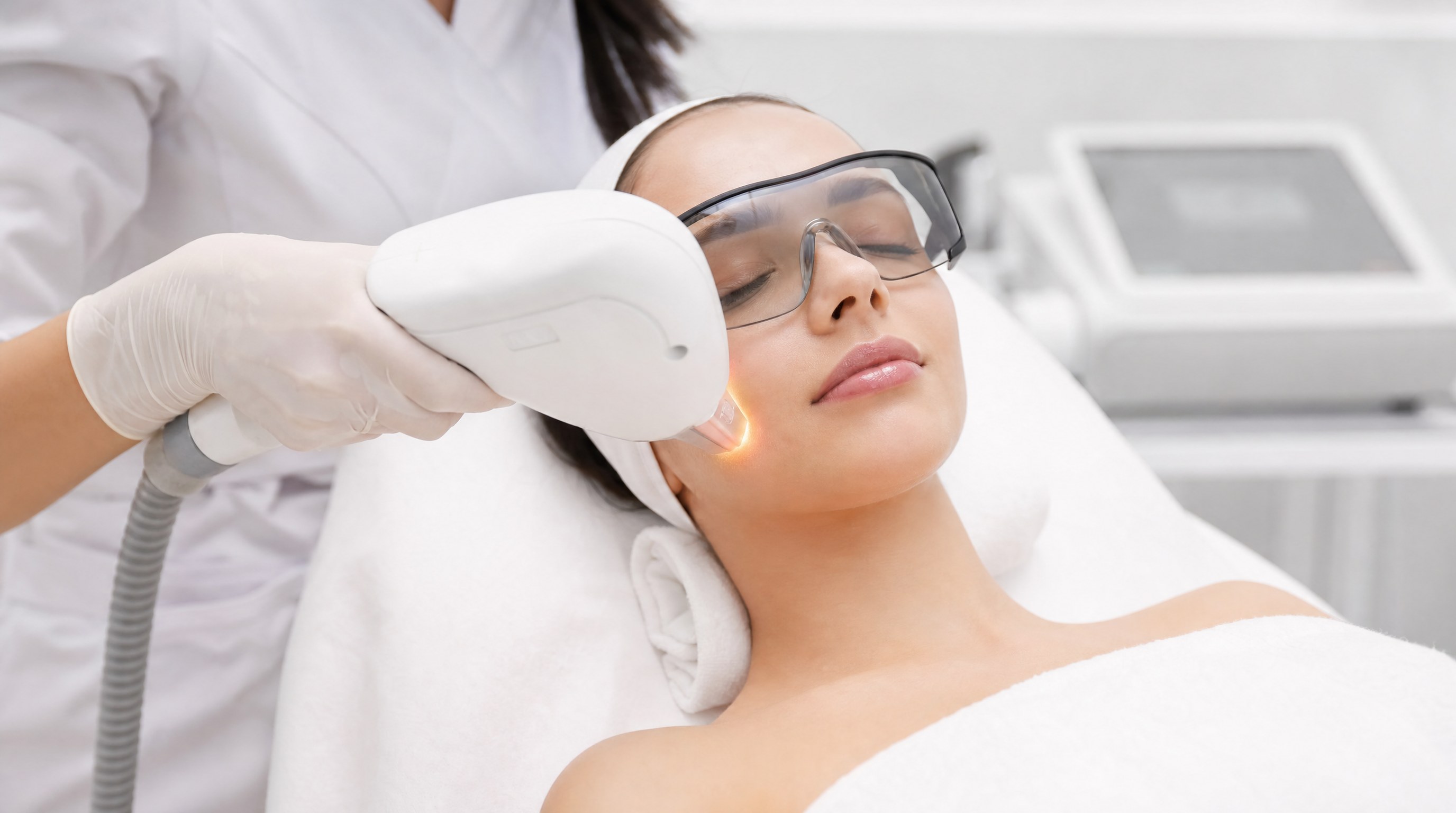
For a true first-timer, most board-certified laser specialists recommend beginning with a non-ablative device before moving to ablative resurfacing. Non-ablative lasers heat the dermis without removing the epidermis. The 1540 nm fractional non-ablative erbium and the 1927 nm thulium fiber laser are common starting points for tone correction and superficial texture. Downtime is typically three to five days of mild redness and peeling, comparable to a moderate sunburn. Ablative fractional CO2, by contrast, can require seven to fourteen days of significant crusting and social downtime. Starting there without prior experience increases the risk of prolonged erythema and, in darker skin tones, post-inflammatory hyperpigmentation.
Candidacy is determined by skin type, active skin conditions, recent sun exposure, and medication history. Isotretinoin use within the past six to twelve months is a common contraindication for ablative procedures because retinoid-thinned skin heals unpredictably. Patients with a history of oral herpes should receive prophylactic antivirals before any resurfacing treatment. Anyone with Fitzpatrick types IV to VI should specifically ask whether the provider has calibrated settings for darker skin, and whether the device selected has published safety data for those phototypes. For a deeper clinical breakdown of how specific devices are selected for different skin presentations, ask a board-certified clinician to explain their reasoning during a consult.
A practical first package often combines two complementary modalities across two to three sessions spaced four to six weeks apart. A typical structure: one session of intense pulsed light (IPL) to address surface pigmentation and vascular lesions, followed by one session of fractional non-ablative laser for texture and early collagen stimulation. IPL is not technically a laser, it emits a broad spectrum of light filtered to specific ranges, but it pairs well with laser treatments and costs less per session, generally 200 to 400 dollars per treatment. Non-ablative fractional sessions typically run 400 to 900 dollars depending on the device, coverage area, and clinic location. A bundled two-modality package at a reputable clinic often runs 900 to 1800 dollars for an introductory series. For related context, see our note on Can Laser Remove Deep Wrinkles in One Session? A Myth Check.
Results from non-ablative protocols are cumulative and gradual. Most patients see a measurable improvement in skin clarity after one session, with tone and texture continuing to improve over three to six months as new collagen matures. A single ablative CO2 session can produce more dramatic results but carries proportionally higher risk for first-time patients who have no baseline understanding of how their skin responds to laser energy. Staged treatment gives both patient and provider useful data before escalating.
Post-treatment care is not optional. Broad-spectrum SPF 30 to 50 applied daily is the single most important factor in preserving results and preventing post-inflammatory pigmentation. A gentle barrier-repair moisturizer and the temporary avoidance of active ingredients like retinoids, AHAs, and vitamin C for the first five to seven days after treatment protects the healing epidermis. Patients with darker skin tones may be advised to use a tyrosinase-inhibiting topical such as azelaic acid or tranexamic acid in the weeks surrounding treatment to reduce melanocyte reactivity.
The honest summary: no single session resolves years of accumulated photodamage, and no reputable provider should promise otherwise. A well-designed first package for beginners prioritizes skin safety, establishes individual response patterns, and builds a foundation for more targeted treatments later. Starting conservative is not timid. It is sound clinical reasoning.
Related reading: What Is Moxi Laser and What Is It Built For, Laser Resurfacing Recovery: What Actually Helps.